Embroidered Sweatshirt Ideas: Placement, Size and Designs That Work
An embroidered sweatshirt is the single most requested machine embroidery project right now, and the two things that decide whether yours looks bought or homemade are placement and stabilizer — not the design. This guide gives you the measurements for each placement, the stabilizer stack that stops fleece puckering, and the designs that suit a sweatshirt rather than a tea towel.
Where to put the design
Measure from the shoulder seam down, and from the centre of the garment out. These are the placements that read as intentional:
| Placement | Position | Design size |
|---|---|---|
| Left chest | 7–9 in down from shoulder seam, 4–5 in in from centre | 3.5–4.5 in wide |
| Centre chest | 8–10 in down from shoulder seam | 6–8 in wide |
| Full front | 9–11 in down from shoulder seam | 8–10 in wide |
| Sleeve | 3–4 in above the cuff | 2–3 in wide |
| Back yoke | 3–4 in below the collar seam | 8–11 in wide |
| Hood, back of neck | centred, 2 in below seam | 2–3 in wide |
The stabilizer stack that stops puckering
Sweatshirt fleece is a knit: it stretches in every direction and it has a pile. That combination causes the two classic failures — a wavy design after the first wash, and stitches that sink into the fabric and disappear.
- Cut-away stabilizer underneath. Not tear-away. Tear-away supports the stitching while the machine runs and then stops supporting it, which is exactly when a knit starts to move. Medium-weight cut-away, hooped.
- Water-soluble topping on top. A sheet of it over the fleece stops stitches sinking into the pile. Skip it and your satin edges look fuzzy.
- Hoop the stabilizer, float the garment. Hooping the sweatshirt itself stretches it, and it relaxes after you unhoop — that is where the puckering comes from. Hoop the stabilizer, spray-baste or pin the garment on top.
- Slow the machine down. 500–600 stitches a minute on dense designs. The extra two minutes buys you cleaner registration.
Stitch count: what a sweatshirt can take
Fleece can carry more stitches than a t-shirt, but there is a ceiling. Past roughly 30,000 stitches in a chest-sized area the fabric goes stiff and the design starts to feel like a patch glued on. Applique is the way around it: a 9-inch applique design costs a fraction of the stitches of the same size in fill.
| Stitch count | How it behaves on fleece |
|---|---|
| Under 10,000 | soft, drapes with the garment, safe on any weight |
| 10,000–25,000 | the sweet spot for a chest design with a cut-away underneath |
| 25,000–40,000 | fine on heavyweight fleece, stiff on thin fleece |
| Over 40,000 | use applique instead, or move it to a tote or cushion |
Designs that suit a sweatshirt
Lettering and quotes
Text is the most-worn sweatshirt design, and it is also the lightest — a word in applique letters costs a few thousand stitches and reads from across a room.
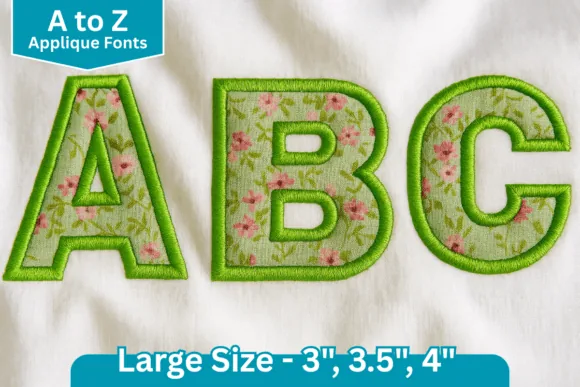
Letters from 3.36 to 4.46 inches at under 3,700 stitches each. Spell a word across the chest in a contrasting fabric.
See it on the fonts page →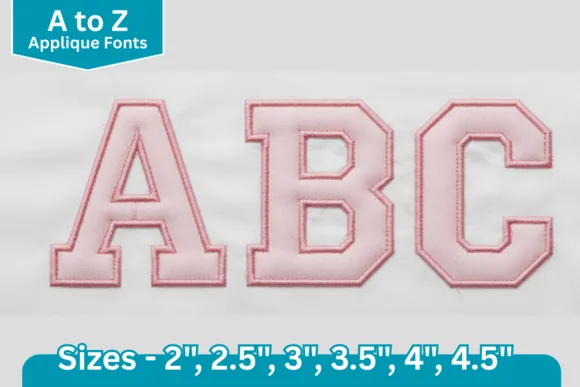
The letterman look. Varsity applique on a sweatshirt is a design people buy in shops, so it does not read as homemade.
See it on the fonts page →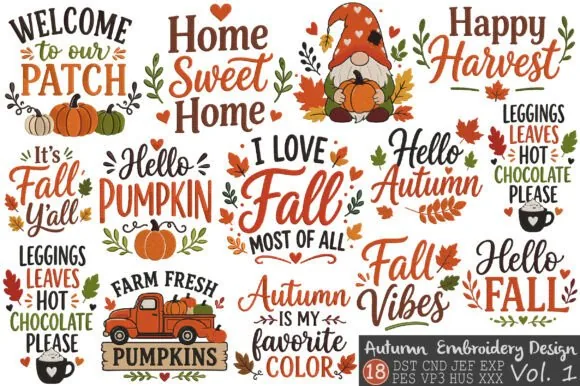
Ready-made autumn phrases for 4x4 and 5x7 hoops, 9,872 to 15,575 stitches — squarely in the sweet spot for a chest design.
See it on the Fall page →Seasonal front designs
Autumn and Christmas sweatshirts are the two that sell, and the two people search for. Keep them in the 10,000–25,000 range for a chest placement.
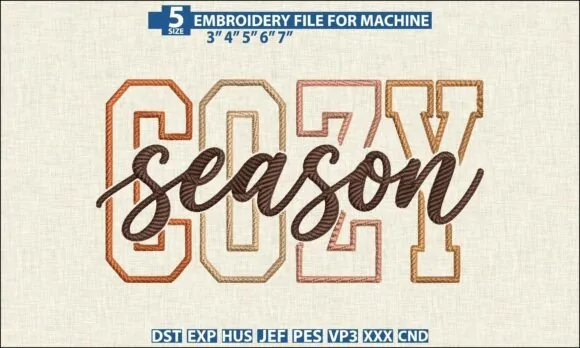
Four sizes from 2x4 up to 4x8, 8,823 to 26,220 stitches. The small size works on a sleeve, the large one across the chest.
See it on the Fall page →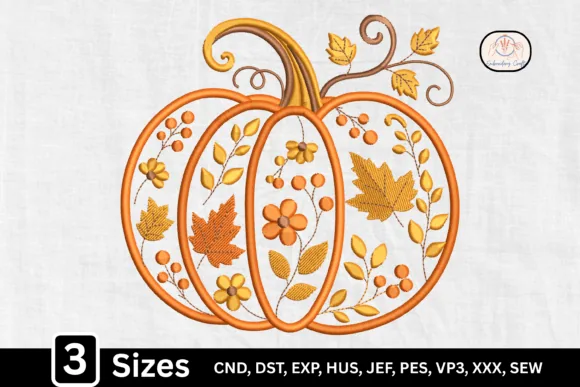
Autumn leaves and a pumpkin in five sizes up to 7x7 — a full-front design that still drapes.
See it on the Fall page →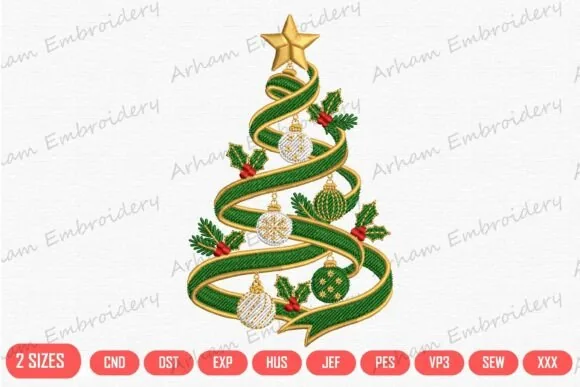
A Christmas tree at 23,000 stitches. Dense enough to look rich on fleece without crossing into stiffness.
See it on the Christmas page →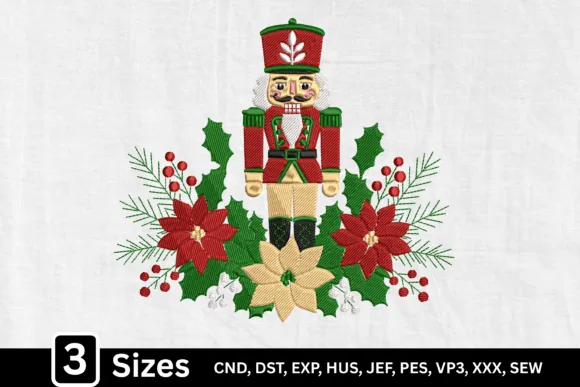
Poinsettia, holly and nutcracker motifs in hoops up to 6x7 — the traditional Christmas sweatshirt look.
See it on the Christmas page →Every design on this page is in the same subscription. Creative Fabrica All Access is $47 for the year with a commercial license, and the trial gives you 10 downloads — enough to stitch a test sweatshirt before you pay.
Florals and line art
Line-art designs are the current trend and the most forgiving on knit: few stitches, no dense fills, nothing to pucker.
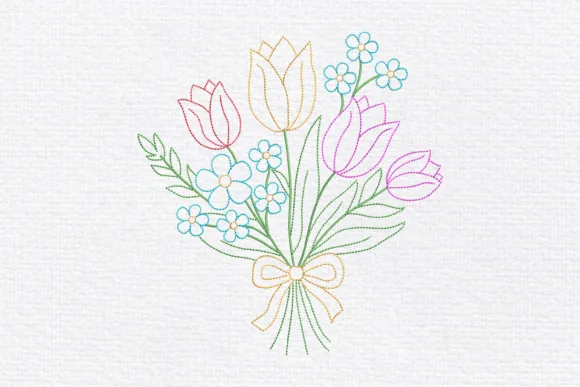
Five sizes from 3x3 to 8x7 at 5,659 to 11,073 stitches. The 8x7 covers a chest and still stitches in under fifteen minutes.
See it on the floral page →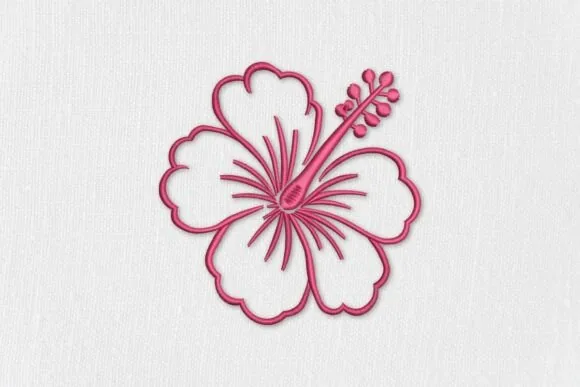
A single-line hibiscus under 6,644 stitches, one colour change. Perfect for a sleeve or a small chest motif.
See it on the floral page →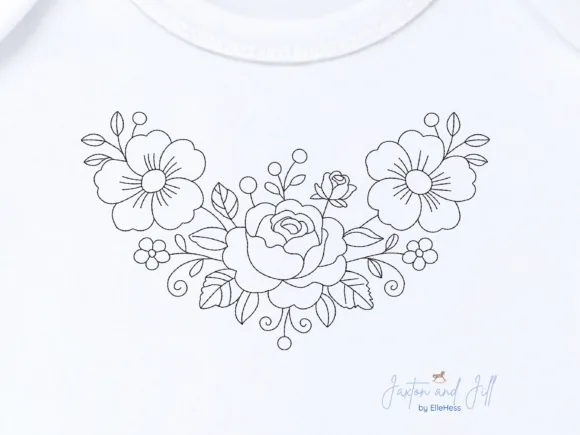
A blackwork border for a 5x8 hoop at 4,666 stitches. Runs along a hem or a sleeve cuff instead of sitting as a block.
See it on the floral page →Statement pieces for the back
The back yoke takes a bigger design than anywhere else on the garment, which is where the dense showpieces finally make sense.
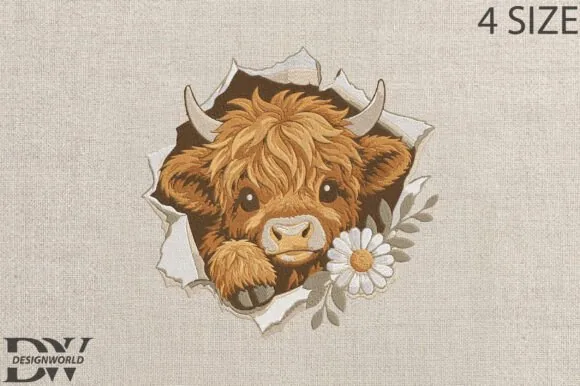
Four sizes up to 8x8. Heavy at 44,699 stitches even in the smallest, so put it on heavyweight fleece and plan an hour.
See it on the animals & baby page →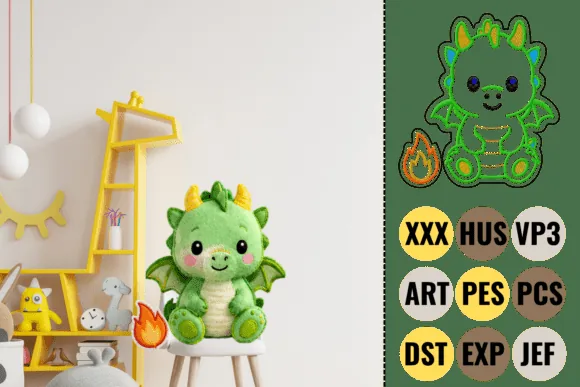
Up to a 9x9 hoop at 16,543 stitches — big coverage for very few stitches, which is exactly what a back design wants.
See it on the animals & baby page →Choosing the sweatshirt itself
- Weight: 8 oz or heavier. Thin fleece shows every stitch of stabilizer through the front.
- Fibre: cotton-rich blends embroider better than 100% polyester, which can pucker and shine under a hot iron.
- Colour: mid-tones hide hooping marks; white and black show them.
- Fit: oversized styles give you a bigger flat area to hoop, which makes placement easier.
The seasonal designs above come from the fall and Christmas collections, the lettering from the fonts page, and the line art from florals. All of them list hoop size and stitch count, which is what you need to make the placement table work.
Questions people ask
Where should a design go on a sweatshirt?
Left chest sits 7 to 9 inches down from the shoulder seam and 4 to 5 inches in from the centre, at 3.5 to 4.5 inches wide. A centre chest design sits 8 to 10 inches down and runs 6 to 8 inches wide. A back yoke design sits 3 to 4 inches below the collar seam.
What stabilizer do I use on a sweatshirt?
Medium-weight cut-away underneath and a water-soluble topping on top. Hoop the stabilizer and float the sweatshirt on it rather than hooping the garment, which stretches the knit and causes puckering when it relaxes.
How many stitches is too many for a sweatshirt?
Above roughly 30,000 stitches in a chest-sized area the fabric goes stiff. Under 25,000 is the comfortable range on most fleece. For large designs, use an applique version instead of a solid fill.
Can I embroider on a hoodie with a pouch pocket?
Yes, but only above the pocket seam. Below it you are stitching through several layers and the hoop will not sit flat. Keep hoodie designs to the chest, the sleeve or the back.
Does embroidery survive washing on a sweatshirt?
Yes, if you used cut-away stabilizer. Wash inside out on a cool cycle and tumble dry low. Designs stitched on tear-away are the ones that go wavy after a few washes.
Some links on this page are affiliate links. If you subscribe through them, I may earn a commission at no extra cost to you. It doesn't change the price you pay.